
ASEAN leaders formally adopted a new Declaration for the protection of migrants on November 15, 2026 during the 49th ASEAN Summit in Manila, the Philippines. The ASEAN Declaration on Fair, Ethical and Sustainable Recruitment is said to aim to establish stronger regional accountability and address emerging vulnerabilities in labor migration by addressing issues related to unethical recruitment that could lead to human rights violations, including human trafficking that involves forced criminality such as online scamming.
According to news reports, the Declaration is aimed at ensuring transparent recruitment, preventing excessive fees, and enhancing cooperation among member states. The declaration emphasizes capacity-building and cooperation rather than penalties and is set to be implemented as part of ASEAN's 2026–2030 work plan. As of 24th November 2026, at the time of writing this article, the official document of the adopted declaration has not yet been released publicly for us to verify.
On September 22, 2026, representatives of BEBESEA met with officials from the Philippine Department of Migrant Workers (DMW) to discuss the then-drafted ASEAN Declaration on Fair, Ethical, and Sustainable Recruitment (FESR). The engagement aimed to unpack the aims and scope of the new declaration, examine how it differs from or complements existing regional frameworks, and advocate for the inclusion of migrant workers in all sectors, including sea-based workers and fishers in its scope.
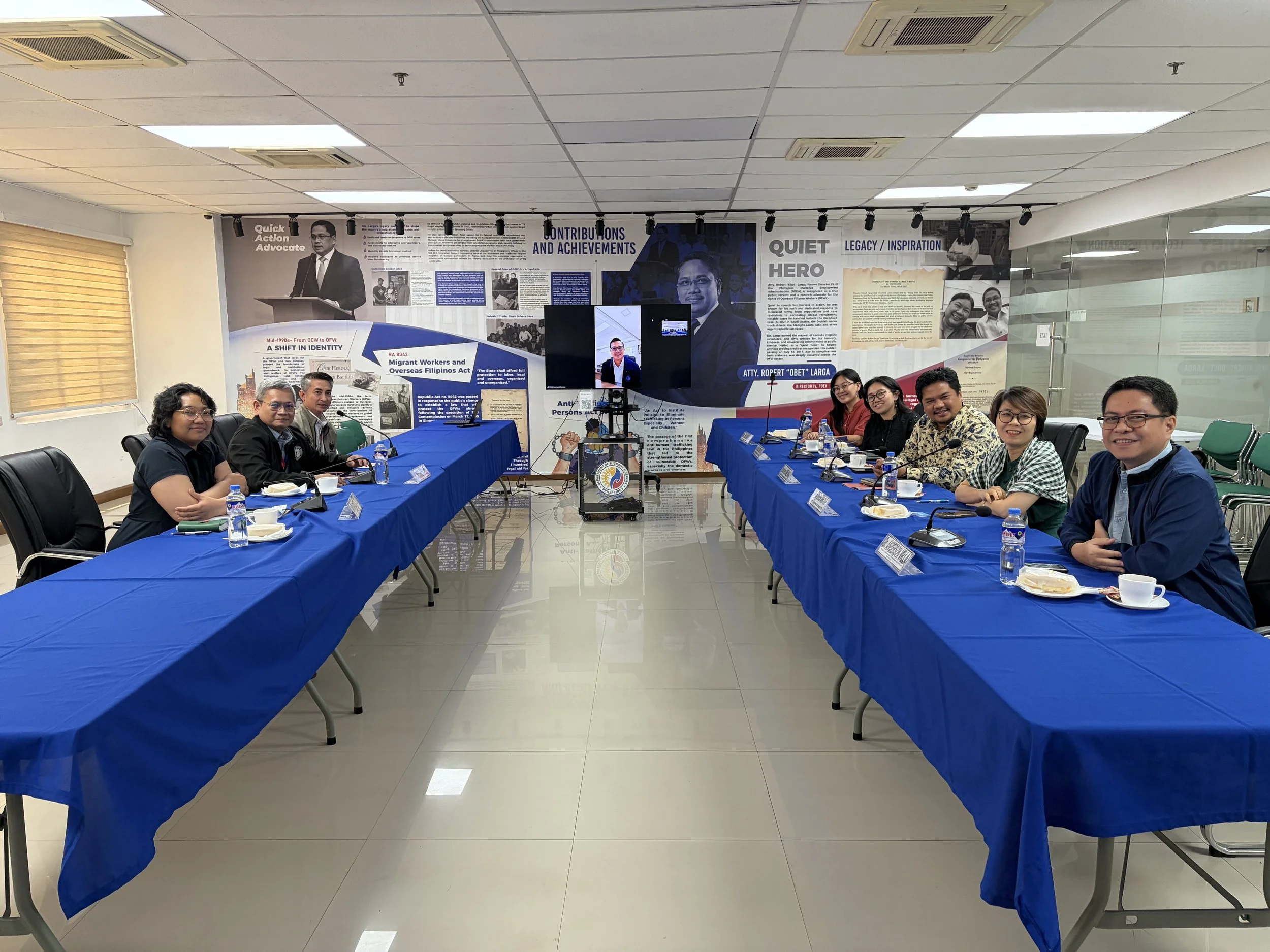
Our regional delegation consisted of five practitioners from civil society and academia, including two representatives from the Human Rights Working Group (HRWG) Indonesia, two delegation members of BEBESEA based in the Philippines, and one partner representative from Vietnam. Representing the DMW were Anna Katerina Fulgencio of International Migrant Workers Policy and Cooperation Bureau, Assistant Secretary Jerome Alcantara of the Office of the Assistant Secretary for Adjudication Services and Regional Operations, Assistant Secretary Levinson Alcantara of the Office of the Assistant Secretary for Policy and International Cooperation. We presented our policy brief to the DMW.
Bridging the Gaps: What Makes the ASEAN FESR Different?
During the dialogue, the DMW officials explained that the ASEAN FESR harmonizes two existing mechanisms: the ASEAN Checklist for Employers on Fair and Sustainable Recruitment and the Cebu Declaration on the Protection and Promotion of the Rights of Migrant Workers.
According to the DMW, crucially, the new declaration expands regional protections to address emerging vulnerabilities of migrant workers in the recruitment process, which were not in the scope of older frameworks. Some of these vulnerabilities stem from technological development and recent changes in regional economies, most notably the rapid increase in online recruitment fraud and scam operations targeting migrant workers.
The framework also aims to integrate technological advancement in the grievance mechanism, so that the workers have access to the mechanism digitally.
Navigating the Philippine Landscape on Migrant Fisher Recruitment
A core priority of BEBESEA’s advocacy is ensuring that workers in all sectors are in the scope of the declaration and relevant policies; in particular, sea-based workers in the fishery sector and other workers in sectors often considered as “informal” are not left behind in regional labor policies. While the Philippines already has Republic Act No. 12021 (the Magna Carta of Filipino Seafarers), which nominally covers sea-based workers, including fishers, significant protection gaps remain on the ground. Compared to commercial seafarers, migrant fishers still lack a concrete protection framework enforced by the DMW, such as the Standard Employment Contract (SEC).
During the meeting, Daniel Awigra, Co-founder of BEBESEA, also shed light on the hidden financial burdens faced by migrant fishers during recruitment such as “training fees” and other arbitrary costs. The DMW said that while Filipino seafarers are legally exempt from paying placement fees as their policies on pre-departure suggest, these types of costs may exist in reality. This can also be experienced by migrant fishers, who lack legal protection.
Moving Forward: Grounding Policy in Local Research
The dialogue also opened new avenues for bilateral cooperation between Indonesia and the Philippines on migrant fisher protection and pre-departure process, with the goal of scaling these efforts across Southeast Asia.
Anderson Villa, a member of BEBESEA's Advisory Board and Chairperson of the Mindanao State University-General Santos City (MSU-GSC) International Relations Department, highlighted the importance of grounding these regional advocacy efforts in local realities by collaborating directly with fisherfolk communities and academic institutions.
Building on earlier groundwork, on November 4, 2026 the DMW, MSU-GSC and BEBESEA discussed prospective collaborative research on local fishers. General Santos City has a unique locality due to cross-border fishing and the complex repatriation challenges faced by its fisherfolk.
Through continued multi-stakeholder dialogue, BEBESEA and its partners aim to ensure that regional recruitment frameworks translate into tangible protections for Southeast Asia’s most vulnerable workers in both land and sea.
