
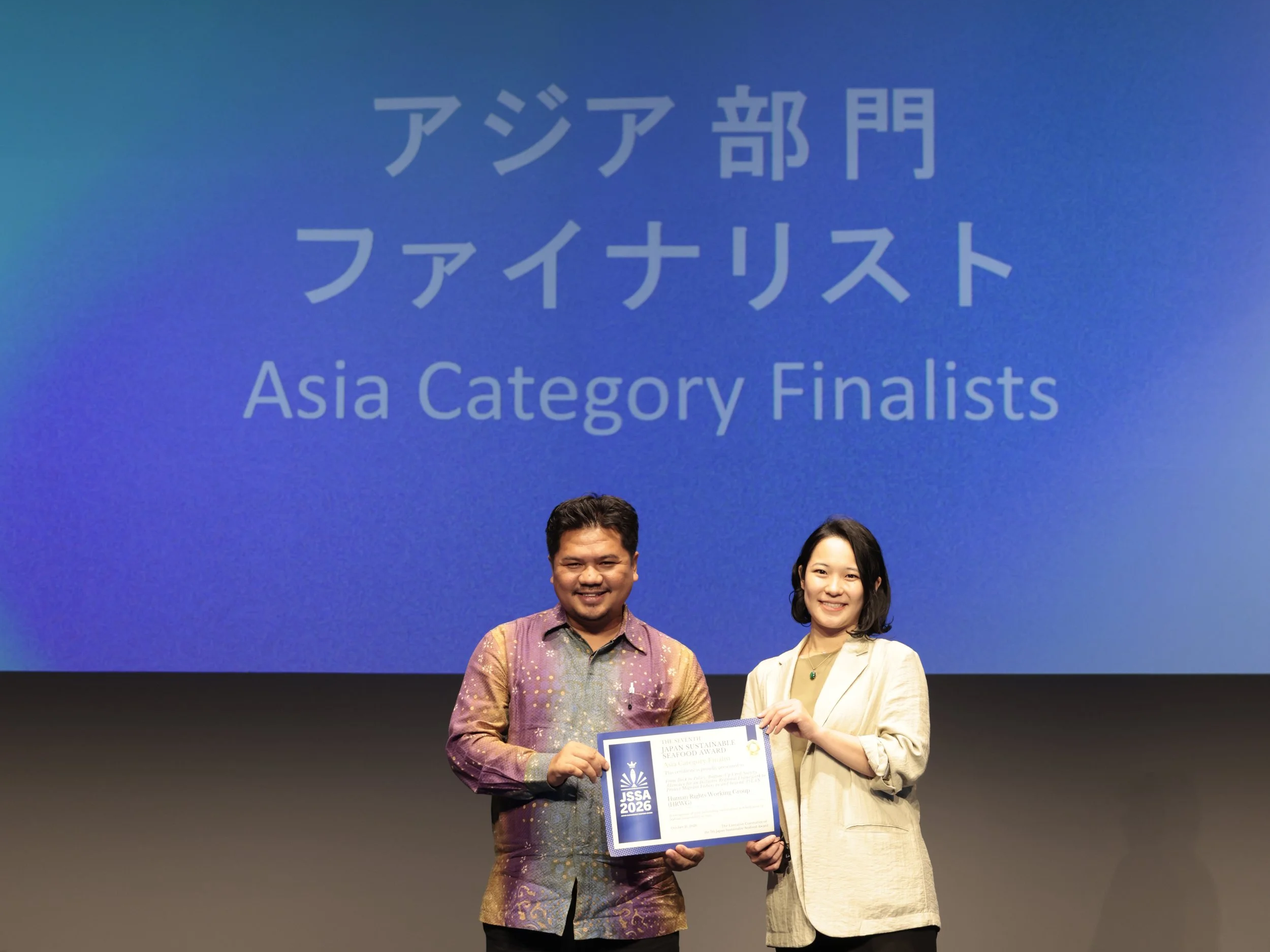
The project “From Deck to Policy: Bottom-Up Civil Society Advocacy for an Inclusive Regional Framework to Protect Migrant Fishers in and beyond ASEAN” by Human Rights Working Group (HRWG) and Better Engagement Between East and Southeast Asia (BEBESEA) was recognised as a finalist in the Asia Category of the 7th Japan Sustainable Seafood Award (JSSA) 2026. The recognition reflects years of sustained efforts to ensure that the lived experiences of migrant fishers and their families are reflected in ASEAN policymaking through collective advocacy work.
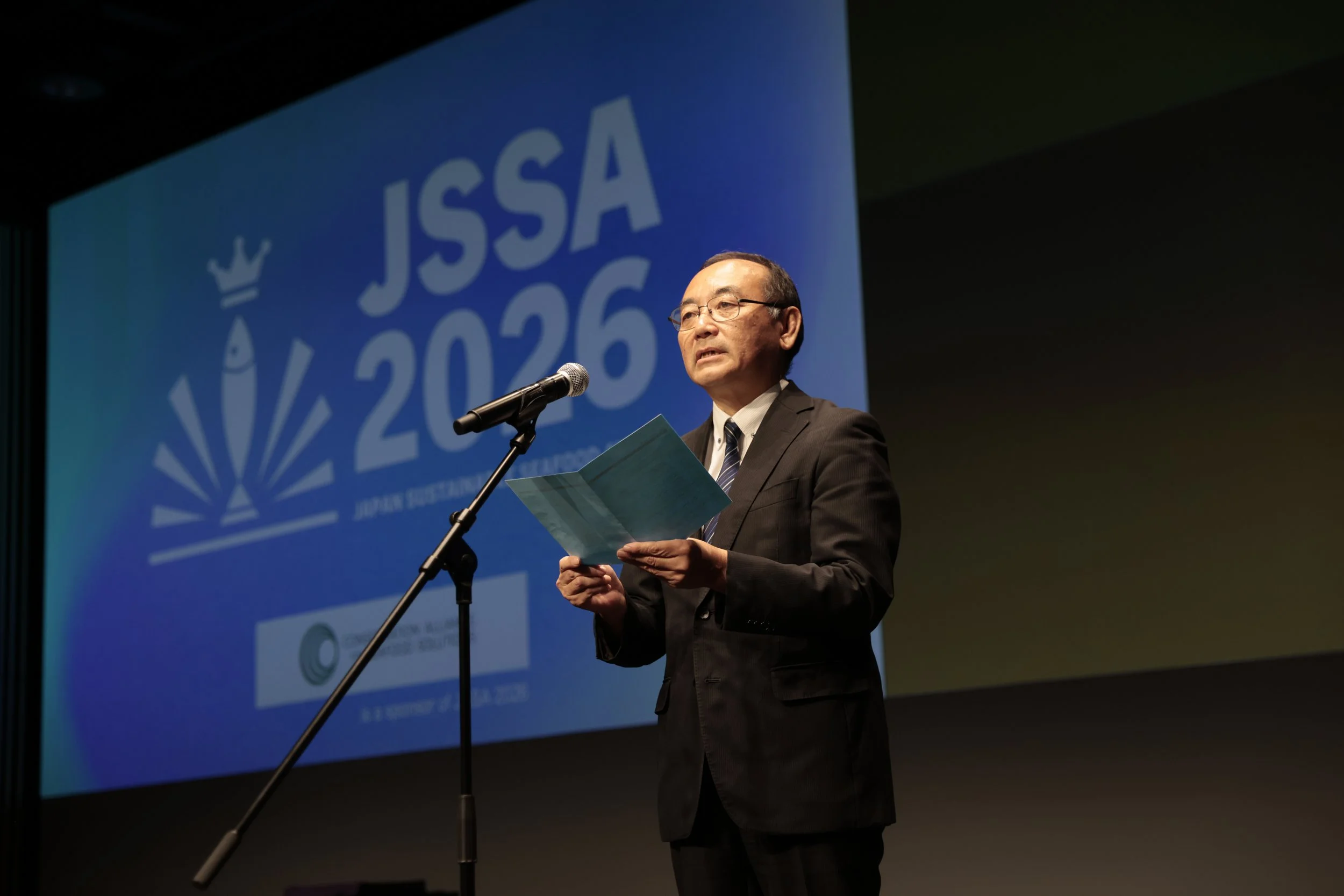
During the Sustainable Seafood Summit (TSSS) 2026, on 21 October, the award ceremony took place, and Daniel Awigra, Executive Director of HRWG and Mariko Hayashi, Co-Founder of BEBESEA presented the project to the forum participants. The selection committee provided the reason for selection;
“This project addressed the complex vulnerability of migrant fishers head-on and took a strong bottom-up approach to reflect the voices of migrant workers and civil society in ASEAN policies. Human rights issues are often left out from policy discussions on fisheries resource management and seafood procurement. The project stands out as it incorporated human rights agenda in these discussions and translated them into policies through participatory and intersectional approaches. The selection panel hopes that the project can further collaborate with the private sector, including buyers, leading to concrete improvements across supply chains.”
Since its launch in 2023, following the adoption of the ASEAN Declaration on the Placement and Protection of Migrant Fishers at the 42nd ASEAN Summit, the project has brought the experiences of migrant fishers into regional policy processes that protect their rights and respect dignity. The major achievement of the project is a successful policy advocacy through co-producing a comprehensive policy paper and a proposed guideline for ASEAN and beyond. This was done through a regional consultation that brought together 40 participants representing 25 civil society organizations from East and Southeast Asia, including maritime unions, human-rights and migrant-rights NGOs and think tanks. Key recommendations were reflected in the ASEAN Guidelines on the Placement and Protection of Migrant Fishers (adopted at the 45th ASEAN Summit in October 2024)
The initiative aims to ensure that migrant fishers and their communities are included and meaningfully participate in regional advocacy and policy-making and implementation, and further engage with multi-stakeholders through discussions about sustainability and responsible seafood supply chains. The project also actively engaged in cross-regional policy dialogue such as ASEAN-EU Policy Dialogue on Human Rights.
The Japan Sustainable Seafood Award (JSSA) was launched in 2019 to further accelerate the sustainable seafood movement in Japan. JSSA recognizes initiatives that promote sustainable fisheries and increase awareness of sustainable seafood. To further expand the award’s scope across Asia, JSSA 2026 launched a brand new Asia Category. The full list of finalists and honorable mentions are available on the website: Award | TSSS2026 The Sustainable Seafood Summit
As emphasised in the project presentation, the recognition of our collective initiative and awards belongs to all of our partners and collaborators, including migrant fishers and sea-based workers' unions and migrant rights organisations, who have contributed their lived experiences and expertise.
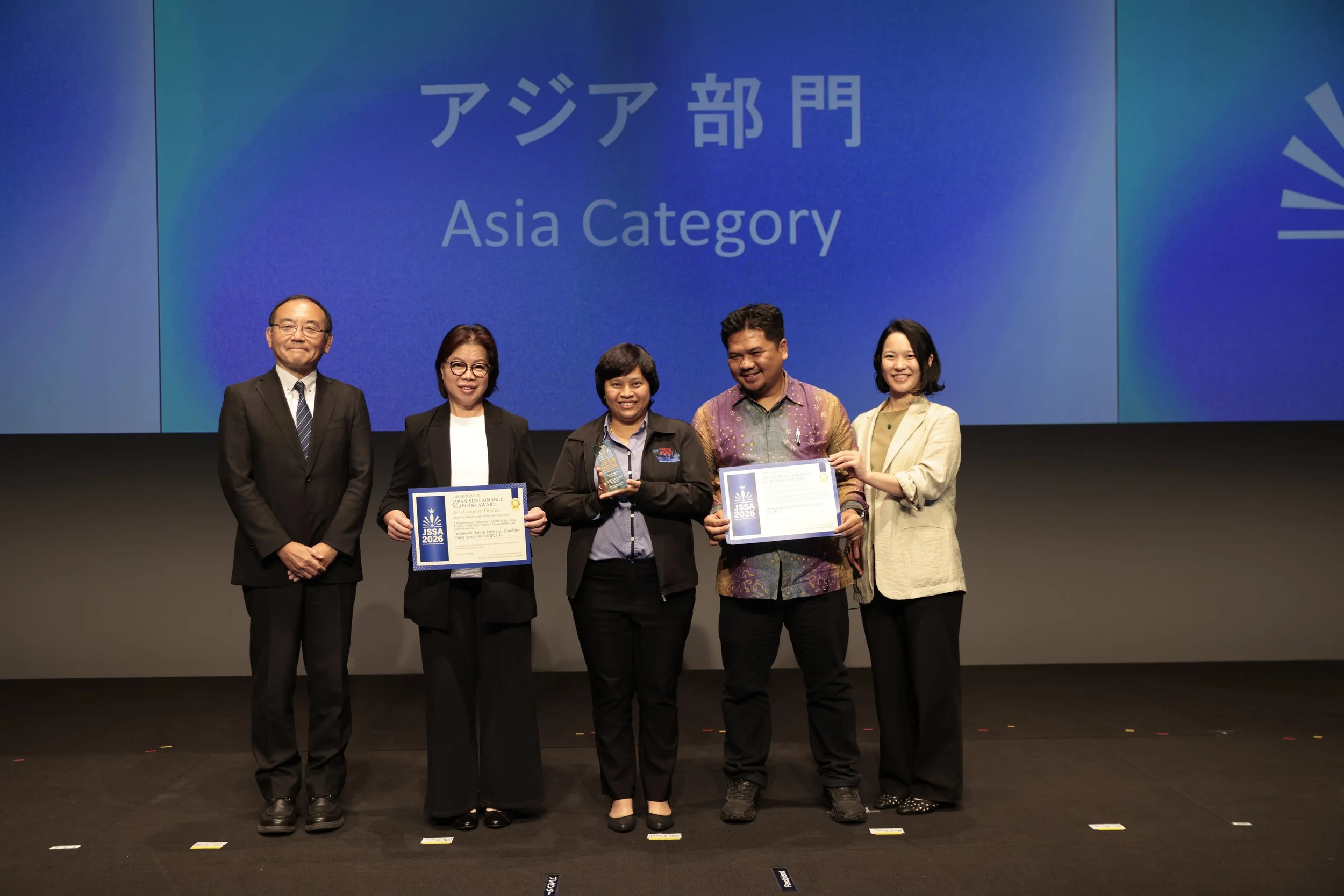
This recognition by JSSA also provided an opportunity to reflect on how human rights advocacy can contribute to transforming the seafood industry. Sustainability cannot be measured solely through responsible fishing practices, traceability, or environmental commitments. It must also consider the people working at every stage of the supply chain, particularly those whose labour often remains invisible.
