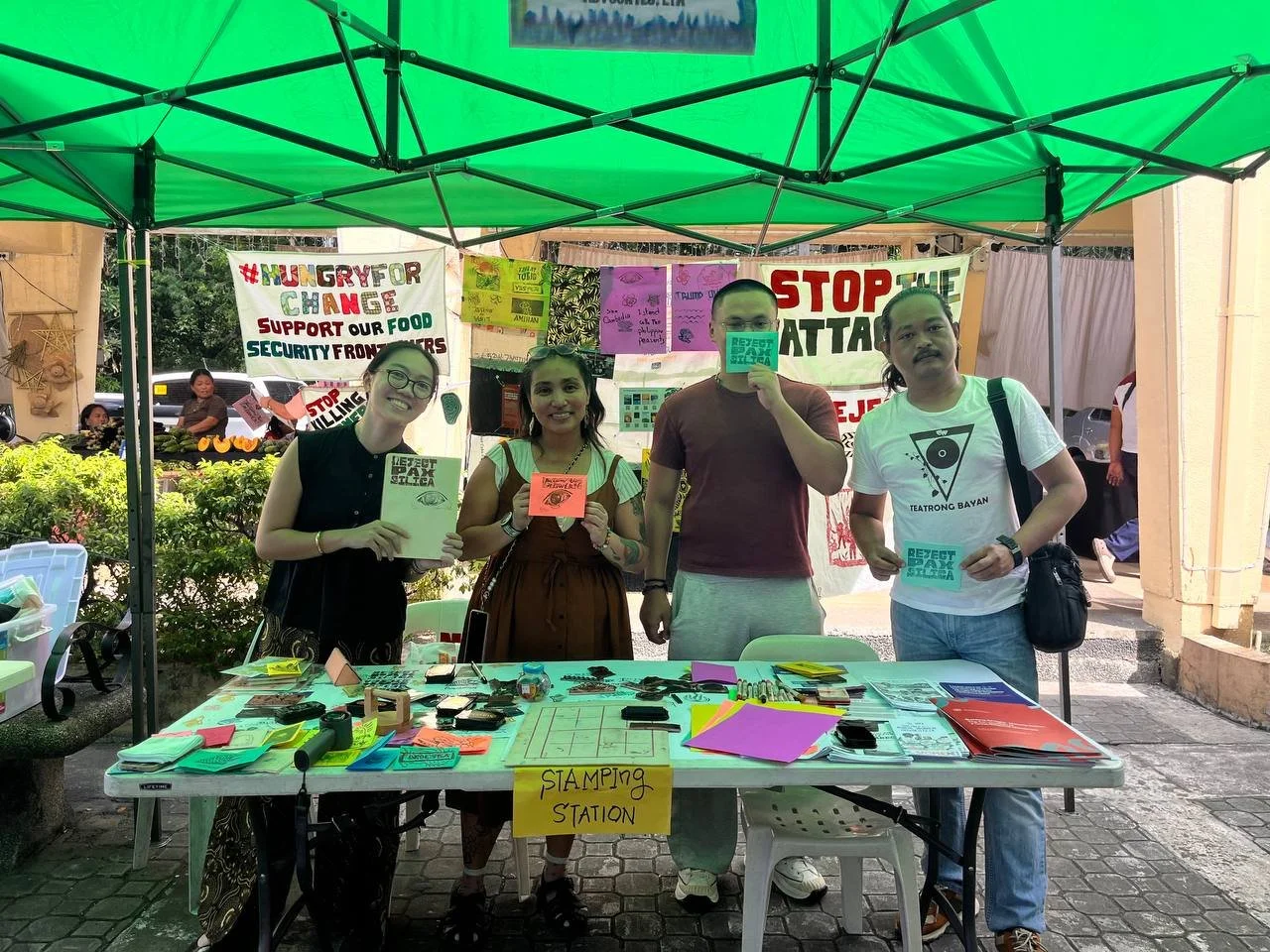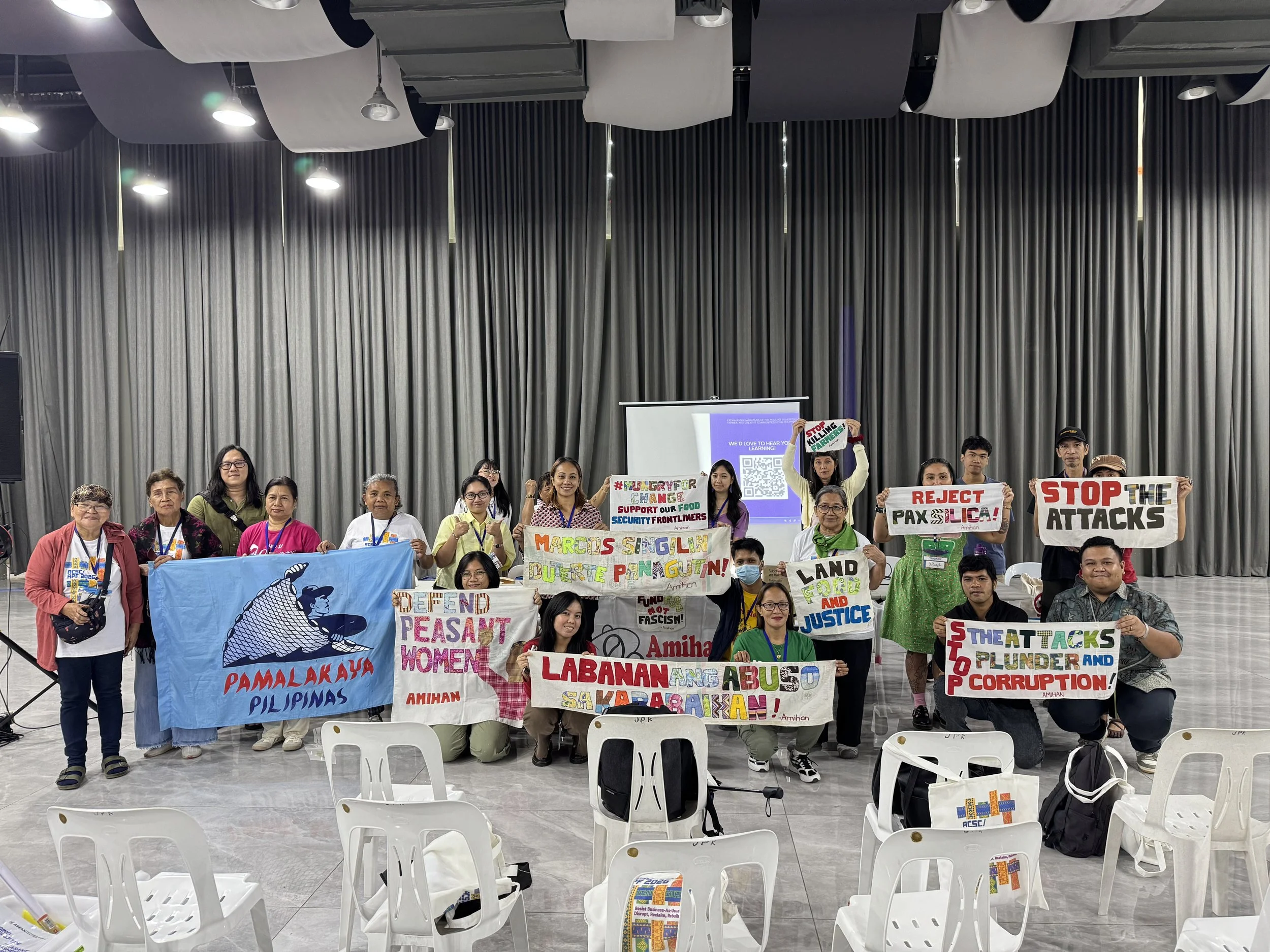
Through our participation in the ASEAN Civil Society Conference / ASEAN People’s Forum (ACSC/APF) , BEBESEA and the Human Rights Working Group (HRWG) partnered with Empowerment Through Art (ETA) and several grassroots organizations to explore issues affecting workers on land and at sea, their intersectionalities, and the role of creatives in advocacy.
ACSC/APF is the largest annual gathering of civil society organizations in the region, held in the rotating ASEAN chair country. With the Philippines holding the chairship this year, the forum became an ideal opportunity to learn directly from local stakeholders representing various Filipino communities. This year, our engagement focused squarely on grassroots community concerns.
Together with Filipino grassroots groups - Rural Women Advocates, Amihan Peasant Women, GAMA Collective, The O Home, Tktk Feminist Printmakers, Concerned Seafarers of the Philippines, and the International Seafarer Action Center - we organized a panel discussion and an art workshop. Through these activities, we exchanged narratives with the community and equipped them with new creative avenues for their campaigns.
To fully understand the realities faced by grassroots communities on the ground, we invited speakers from across the agricultural and fisheries sectors to share their lived experiences. Complementing their testimonies is a special video report produced by AlterMidya, an alternative media group in the Philippines, which captures the intersecting land and sea struggles in Camarines Sur. Although not shown during the live program, you can watch the feature below to see how these issues unfold on the ground:
The panel session started with a contribution by Ms. Zenaida Soriano of Amihan Peasant Women. She discussed pressing issues related to land and agricultural workers. She noted that the government’s neoliberal and business-centered development policies often exclude the welfare of local communities. As a result, farmers suffer from a lack of resources, land-grabbing and are often faced with militarization whenever they protest to protect their lands. Supporting their efforts is Rural Women Advocates, the volunteer arm of Amihan, they help amplify community voices through creative campaigns such as art workshops.
Ms. Gina Madrigal of PAMALAKAYA spoke about the struggles of fisherfolk in coastal communities. Much like farmers, fisherfolk are burdened by a lack of inclusive government policies and ongoing development projects that severely impact their livelihoods. She also highlighted the social cost of this loss of livelihood, noting that women often bear the brunt of keeping their families well-fed and intact, frequently joining their husbands at sea to help fish and provide for their households.
Ms. Ma. Elena Domingo from The O Home shared the reality of her hometown in Hagonoy, Bulacan which has become chronically flooded due to ongoing government development projects. The local fishing community has been forced to adapt to deteriorating environmental conditions. Furthermore, the destruction of mangroves, which are vital to marine life, has severely impacted fishermen's livelihoods, driving internal displacement as residents leave in search of better opportunities and living conditions. As a creative herself, Ms. Elena uses art to raise awareness about her community's plight.
Yllang Montenegro, founder of Empowerment Through Art and an Advisory Board member of BEBESEA, closed the panel discussion by affirming how these cross-sectoral issues are interconnected through the shared challenges these communities face. She called for stronger support and broader networks to listen to and understand their situation, asking:
“Why do we have this feeling that we always have to survive instead of living in a dignified way?”
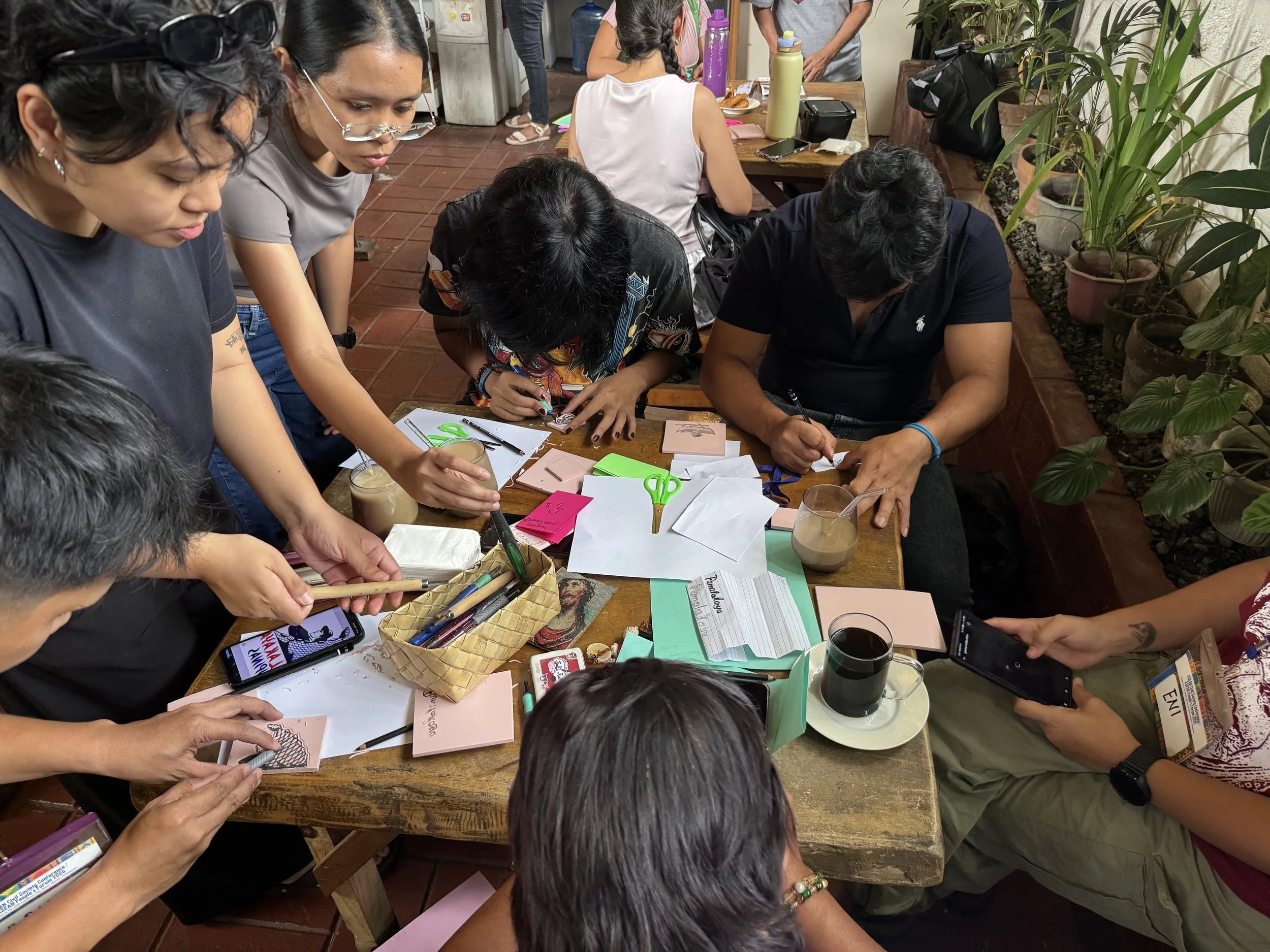
Following the panel discussion, artists from GAMA Collective and Tktk Feminist Printmakers facilitated a capacity-building workshop on printmaking and zine-making. They introduced the history of both mediums and guided participants in creating their own pieces. These works were eventually combined into a collective print displayed at the Tapiserya exhibition.
Works are compiled in this file.
Ultimately, this initiative offered a broader perspective on how issues faced by local communities of workers on land and at sea intersect. While heavily rooted in the Philippine context, these challenges mirror trends across Southeast Asia. As the region grows in economic prominence globally, an influx of development projects increasingly threatens the lands and livelihoods of local communities. Through this event, we demonstrated how art can serve as a powerful tool for mobilizing and empowering communities in their ongoing advocacy.